
Immune cell DNA maps link genetic variants to disease signals
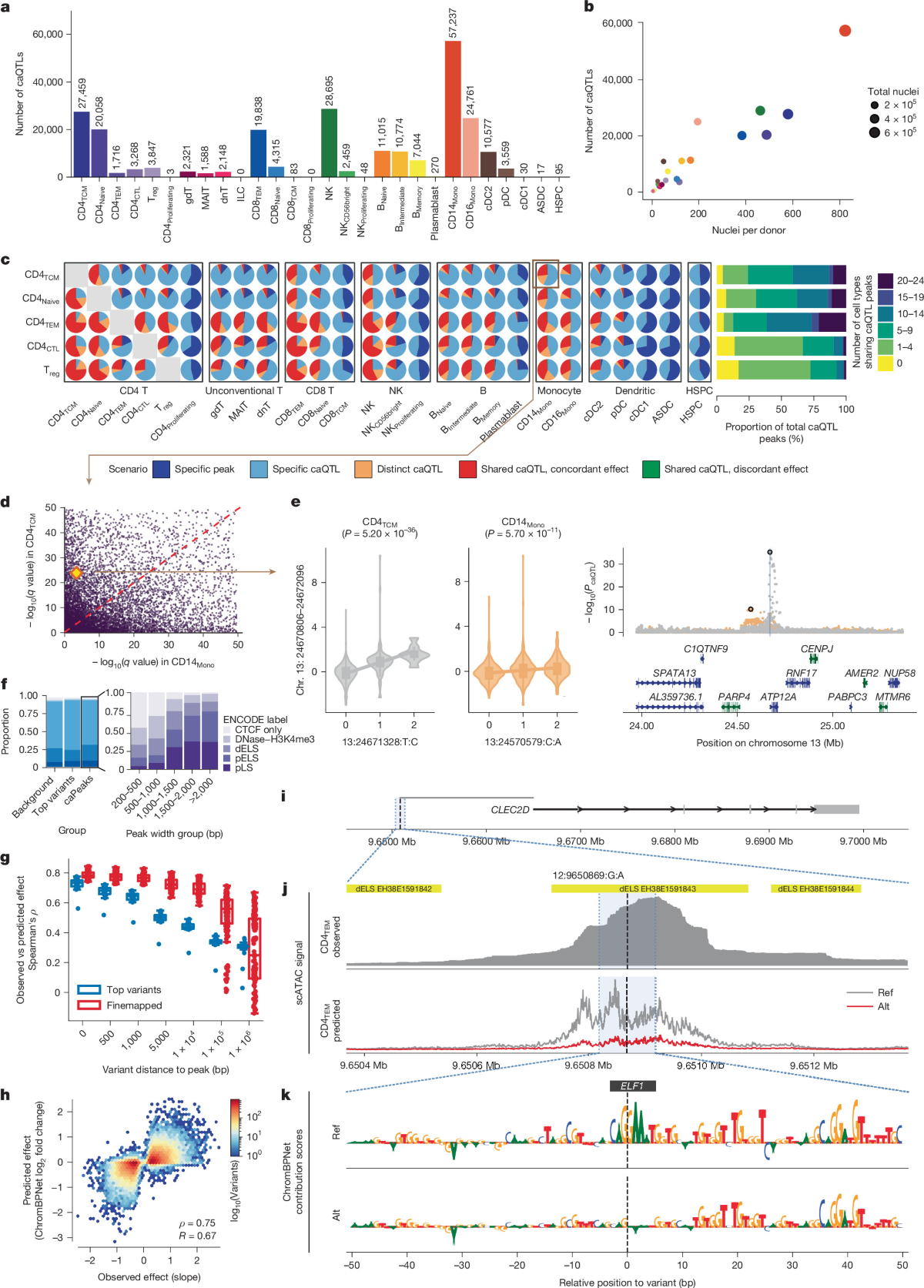
Researchers identified 243,225 associations between genetic variants and DNA accessibility in human immune cells, with 60% specific to a cell type. Accessibility describes how exposed DNA is to the machinery controlling gene activity. The Nature study retained 3,472,552 cell nuclei from 922 donors after quality checks. Across genetic studies of 16 diseases and 44 blood traits, accessibility associations shared 4.5% to 22.6% more signals than associations with gene expression alone.
The team combined DNA accessibility profiles with whole-genome sequencing to measure donors' genetic variation. An additional 60 donors were used for replication. Across 28 immune cell types, researchers tested 440,996 accessible DNA regions, called peaks. Only 4.0% were within 200 DNA letters of a transcription start site, where reading a gene begins.
A cell's state, meaning its current activity, also affected the results. Of over 200,000 interactions between genetic variants and cell state, 27% showed no association with accessibility when cell state was ignored. At ADCY7, a gene linked to inflammatory bowel disease risk, accessibility effects varied with genetic makeup and G protein-mediated pathway activity. These signalling pathways were studied in CD4+ T cells, a type of immune cell.
Combining accessibility results with gene-expression measurements from 5.4 million blood immune cells identified 28,834 candidate nearby DNA elements that regulate genes. Shared genetic signals supported these candidates, though a shared signal alone does not show the direction or size of an effect. Mendelian randomization, a method that uses genetic variation to assess possible causal relationships, supported over half of them. A separate analysis of rare variants found 38,161 associated peaks. At individual locations, it implicated predicted disruption of binding by transcription factors, proteins that control gene activity.
For inflammatory bowel disease, the team combined the accessibility and gene-expression associations by cell type, searched wider stretches of DNA around each gene and allowed several causal variants at a location. That raised the share of risk locations where a disease signal matched a gene-regulation signal from 16% to 65%, compared with using only gene-expression data from bulk samples, which mix many cell types.
A graph neural network, a machine-learning model that learns relationships between connected elements, used both accessibility and gene-expression associations to infer links between accessible DNA regions and genes. It worked with unpaired multiome data, where accessibility and gene-expression measurements were not paired in the same cells. In that setting, accuracy was up to 17.2% higher than with data that did not incorporate the genetic associations. The model also uncovered 128 additional pairs linking transcription factors to their targets, a 22% increase.
Most risk locations identified by genome-wide association studies lie in non-coding DNA, which does not encode proteins. That makes their effects difficult to interpret. The accessibility maps detected cell-state-dependent genetic associations and shared disease signals missed by gene-expression analysis alone, giving researchers additional leads for investigating how these variants affect gene regulation.
Written by the Genomes desk from the primary source cited and linked above and checked against it. Research use only; not medical advice. Corrections: [email protected].