
Alzheimer’s analysis finds inherited-risk gene signals missed by individual tests
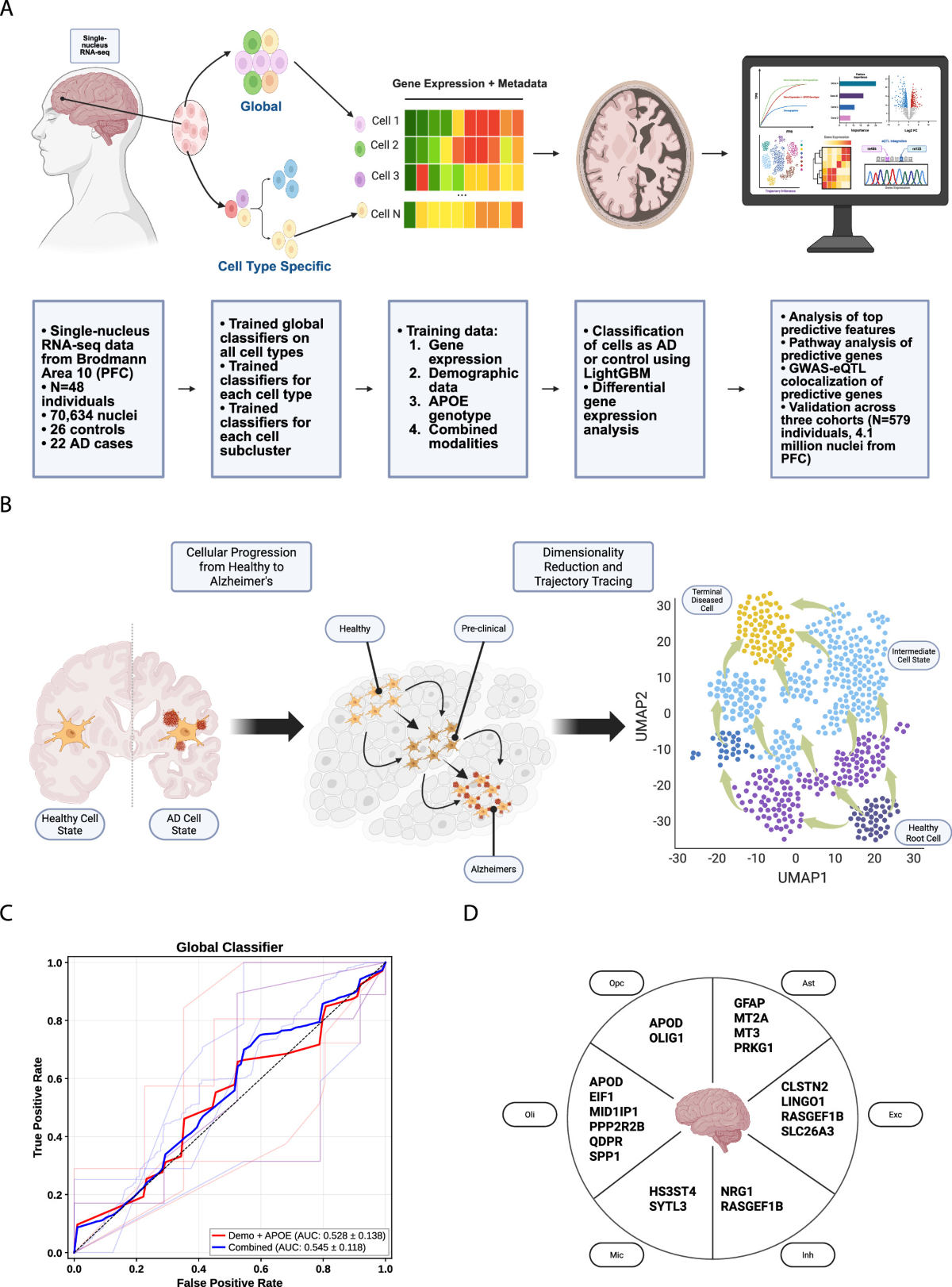
An analysis of approximately 4.2 million brain cell nuclei from 627 donors found 27 gene and cell type pairs linked to inherited Alzheimer’s disease risk that tests of average gene activity had missed. Writing in Nature Communications, the researchers described TriSCOPE, a machine learning framework combining three approaches to examine gene activity. Across six datasets, six major brain cell types and 41 cell subgroups, genes identified by modeling many genes together largely differed from those identified by individual tests. Patterns associated with cognitive impairment also differed from those associated with Alzheimer’s brain changes, including plaques and tangles.
All six datasets came from the dorsolateral prefrontal cortex, a brain region involved in the executive functions affected in clinical Alzheimer’s disease. The researchers used single-nucleus RNA sequencing, which measures gene activity within individual cell nuclei. TriSCOPE combined models that considered many genes together with comparisons of gene activity between groups and estimates of how activity patterns differed from a healthy reference state.
A gene can carry information about disease when considered alongside other genes, even if its average activity does not differ significantly between groups. The models also accounted for factors including age, sex and APOE genotype, the version of the APOE gene a person carries. To connect some candidate genes to inherited risk, the researchers examined whether genetic signals associated with Alzheimer’s disease and signals affecting gene activity pointed to a shared location in DNA.
Combining evidence from all three approaches identified candidates involved in stress responses in astrocytes, a type of brain support cell, as well as signaling in neurons. Genes identified by the models that were also found in independent cohorts included ARL17B, LINGO1 and APOE.
The initial clinical analysis used 70,634 nuclei from postmortem human brain tissue. Diagnoses came from donors’ last assessments while alive and were adjudicated by a panel of neurologists, neuropsychologists, and other clinicians. Validation used two independent cohorts comprising 1.5 million nuclei.
The authors designed TriSCOPE to narrow thousands of candidate genes to a smaller set for research, rather than to predict a person’s future disease course.
Written by the Genomes desk from the primary source cited and linked above and checked against it. Research use only; not medical advice. Corrections: [email protected].